Summertime Foraging | Medicinal and Edible Plants of North Georgia
In the lush warmth of a North Georgia summer, the forests, fields, and roadsides become a living apothecary! From aromatic herbs to vibrant berries, the season offers an abundance of edible and medicinal plants for those who know where and how to look. In this guide, we’ll explore some of the most notable wild plants thriving in the North Georgia landscape now in August and September, including both native treasures and long-established introduced species.
Foraging is as much about stewardship as it is about harvest. Always positively identify a plant before use, and be aware of toxic lookalikes. Harvest only from clean, chemical-free areas, taking no more than needed from healthy colonies. Prioritize native species, leave rare or threatened plants undisturbed, and remember that wildlife also relies on these resources. Above all, move slowly and mindfully; your presence should leave the landscape as vibrant as when you found it.
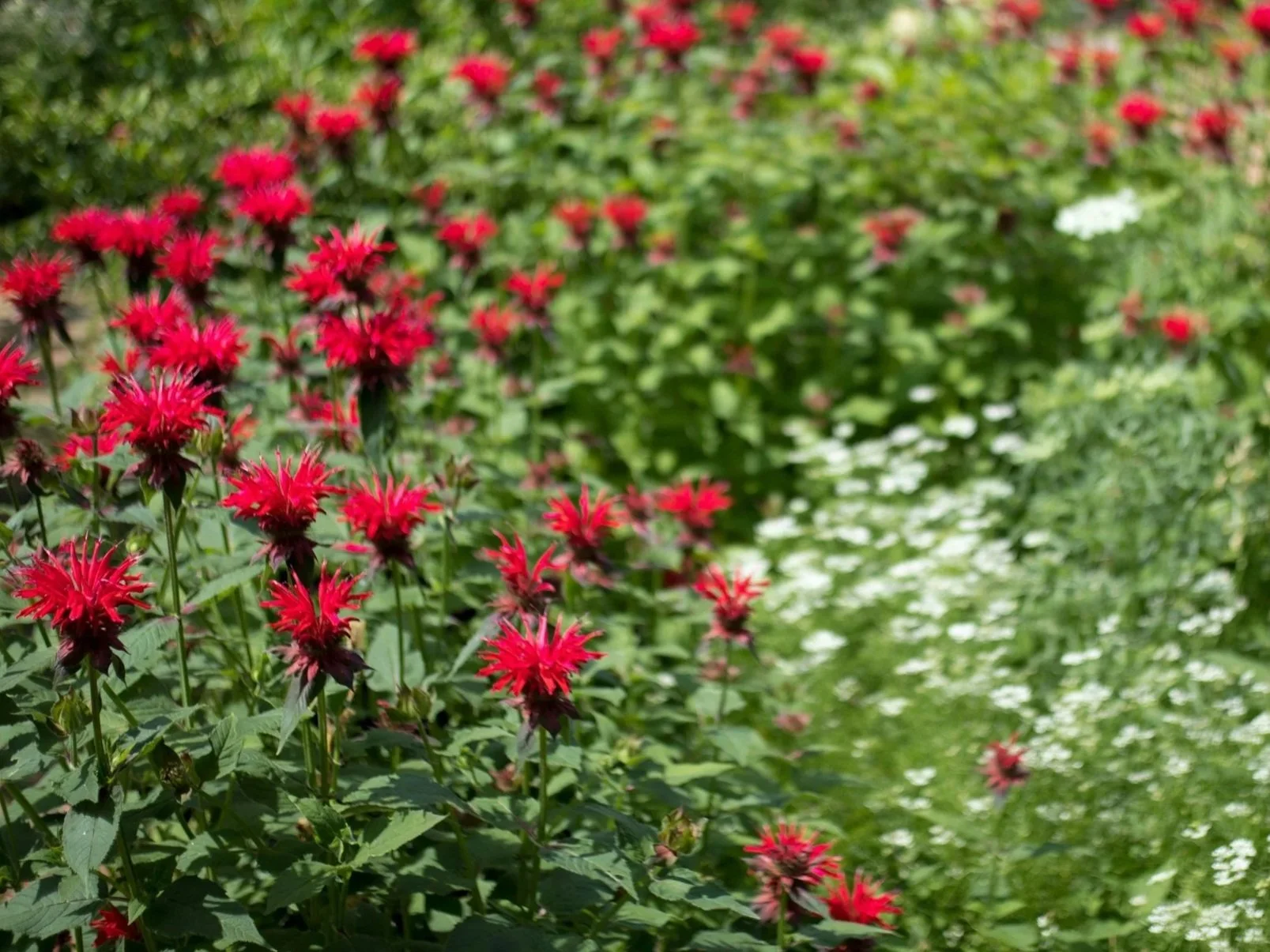
Bee Balm (Monarda didyma)
Native or Introduced: Native to Eastern US
Parts Used: Leaves, flowers
Herbal Actions: Carminative, antimicrobial, diaphoretic, digestive stimulant Medicinal Preparations: Teas, tincture, syrup, oxymels
Botanical ID: Square stems; opposite, aromatic leaves; tubular flowers in shades of red clustered at stem tips.
Habitat: Sunny meadows, garden edges, and woodland clearings.
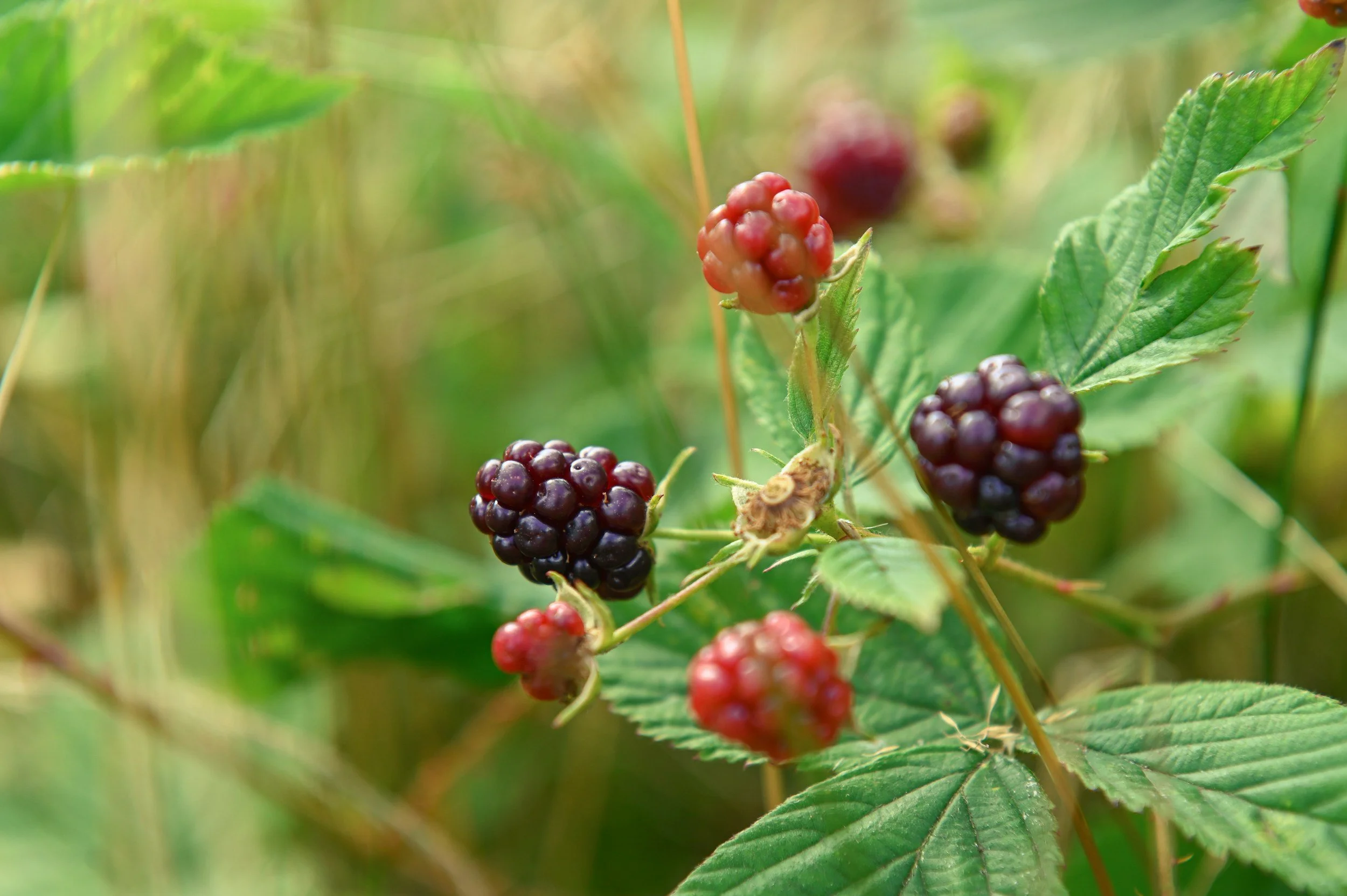
Blackberries (Rubus spp.)
Native or Introduced: Some native to Eastern US, others are naturalized
Parts Used: Berries, leaves, roots
Herbal Actions: Astringent, antioxidant, nutritive, anti-inflammatory Medicinal Preparations: Berries can be used in teas, jams, syrups, and oxymels; leaves in teas and syrups; roots in tincture or syrup.
Botanical ID: Thorny arching canes; compound leaves with serrated edges; white or pale pink five-petaled flowers; clusters of black aggregate berries.
Habitat: Field edges, roadsides, woodland margins.
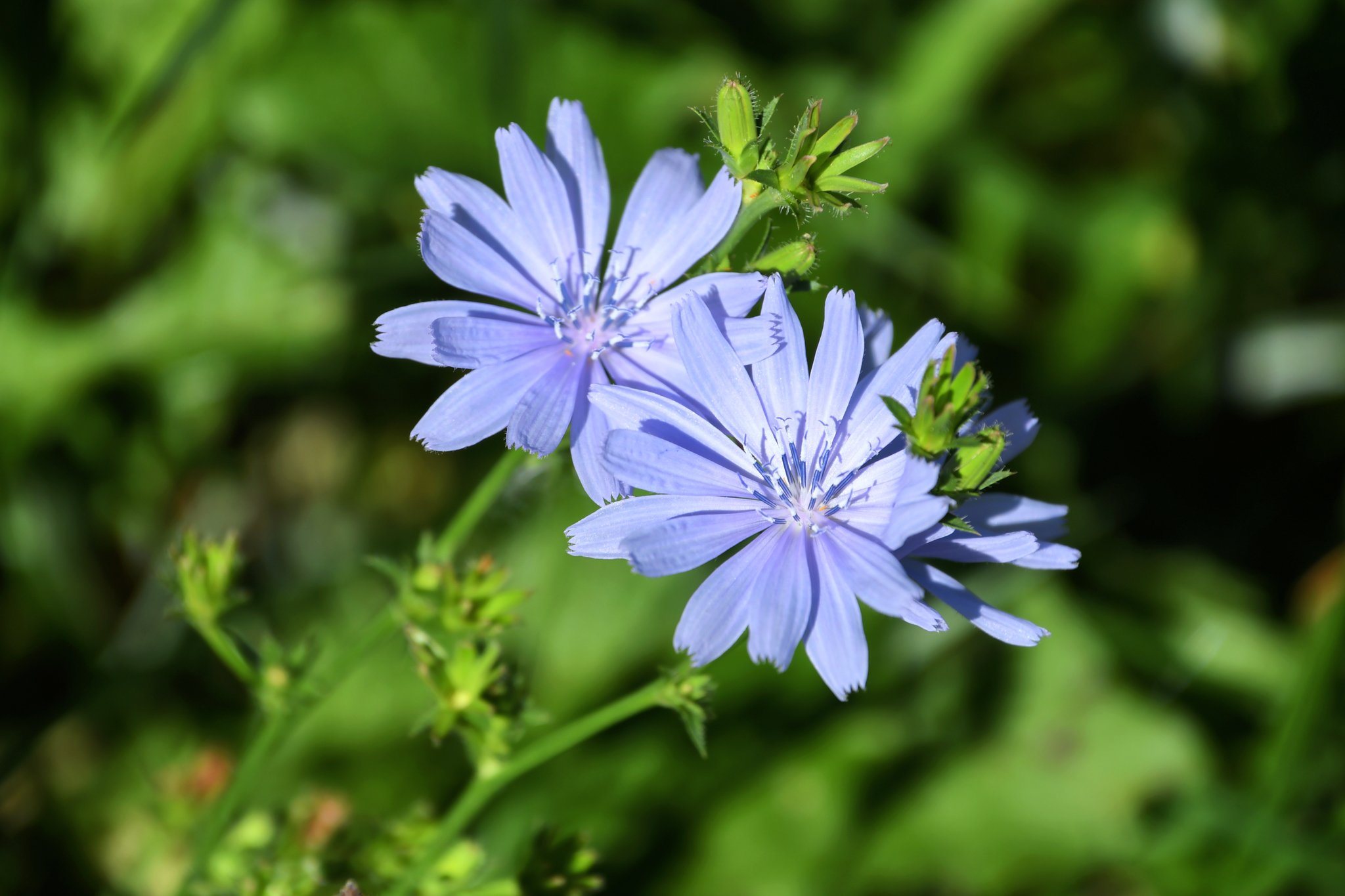
Chicory (Cichorium intybus)
Native or Introduced: Introduced (Europe)
Parts Used: Roots, young leaves, flowers
Herbal Actions: Bitter tonic, hepatic, digestive, mild laxative Medicinal Preparations: Roots for herbal coffee (teas), and infused honey, leaves for salads and pestos
Botanical ID: Tall, hairy stem; sparse, oblong leaves; bright blue ray flowers that open in morning sun; milky sap in the stem.
Habitat: Roadsides, pastures, open fields.
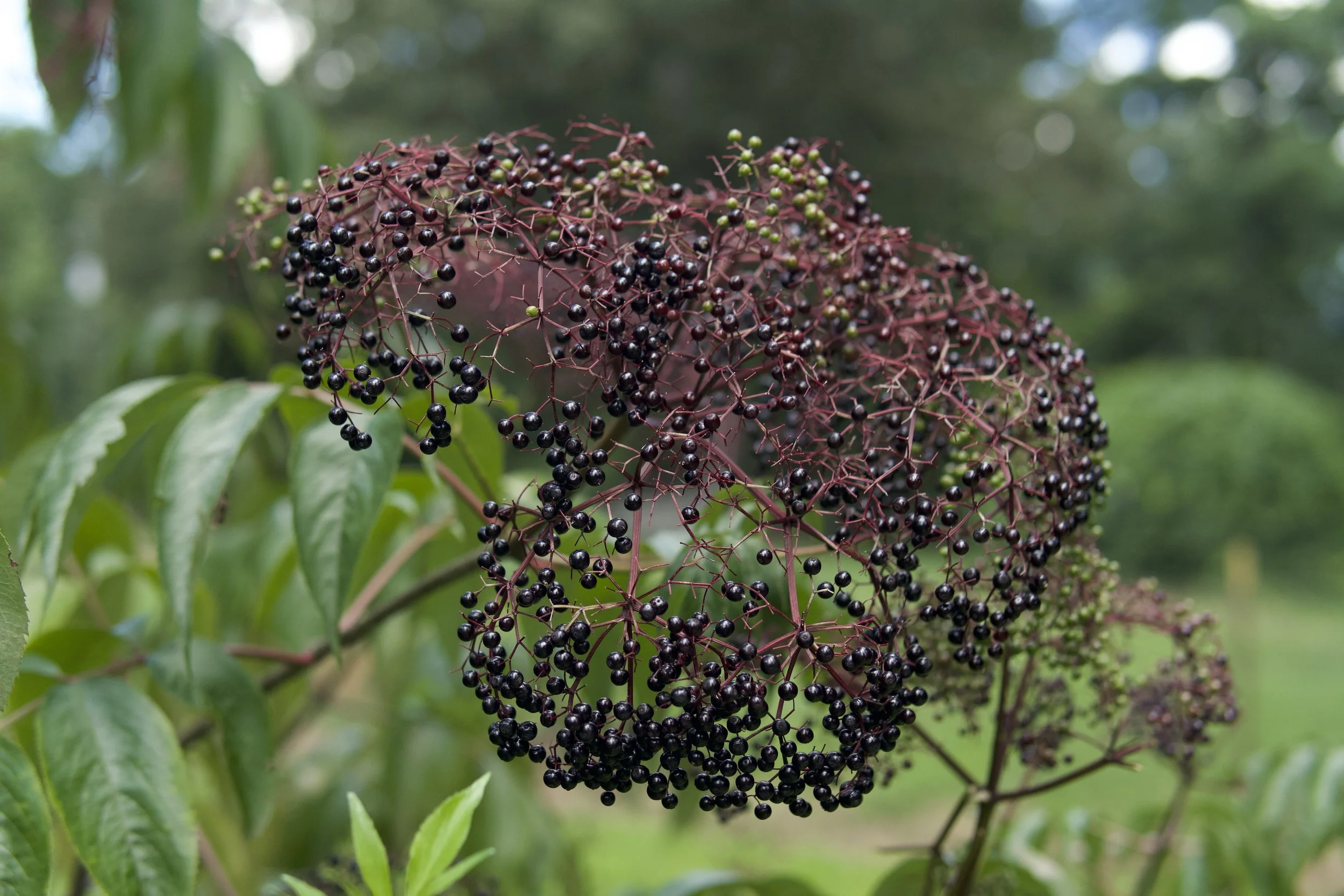
Elderberry (Sambucus canadensis)
Native or Introduced: Native to Eastern US
Parts Used: Ripe berries, stems removed
Herbal Actions: Immune stimulant, antiviral, diaphoretic, mild laxative Medicinal Preparations: Teas, tinctures, syrup, oxymels, jam, ferments
Botanical ID: Large shrub with opposite, pinnately compound leaves; flat-topped clusters of creamy-white flowers in early summer; drooping clusters of small dark purple berries later in season.
Habitat: Moist soils along streams, ditches, roadsides, and field edges.
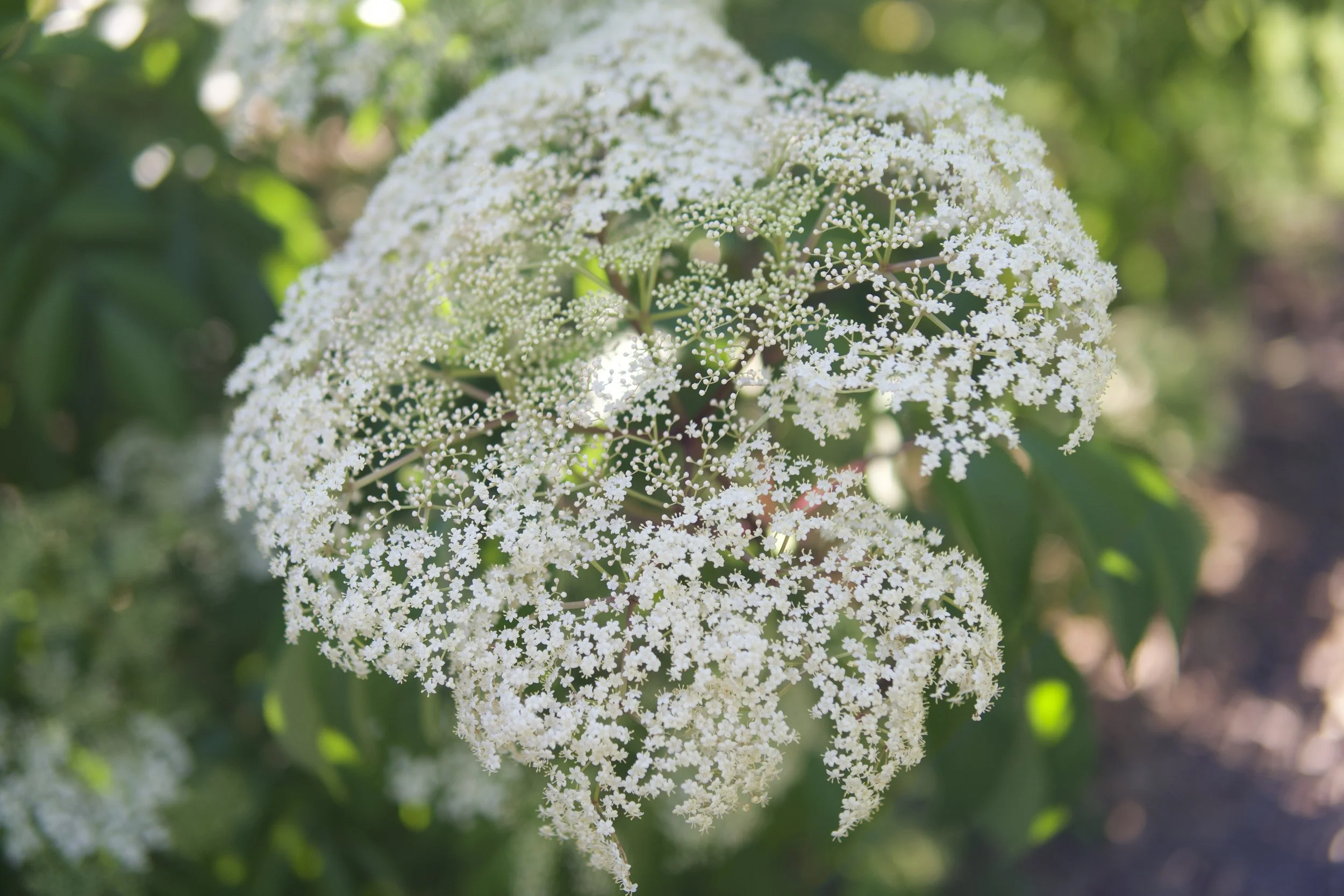
Elderflower (Sambucus canadensis)
(See Elderberry above—flower stage)
Parts Used: Flower stems removed
Herbal Actions: Cooling diaphoretic, anti-inflammatory, allergy support Medicinal Preparations: Teas, tinctures, syrup, oxymels, cordials, ferments
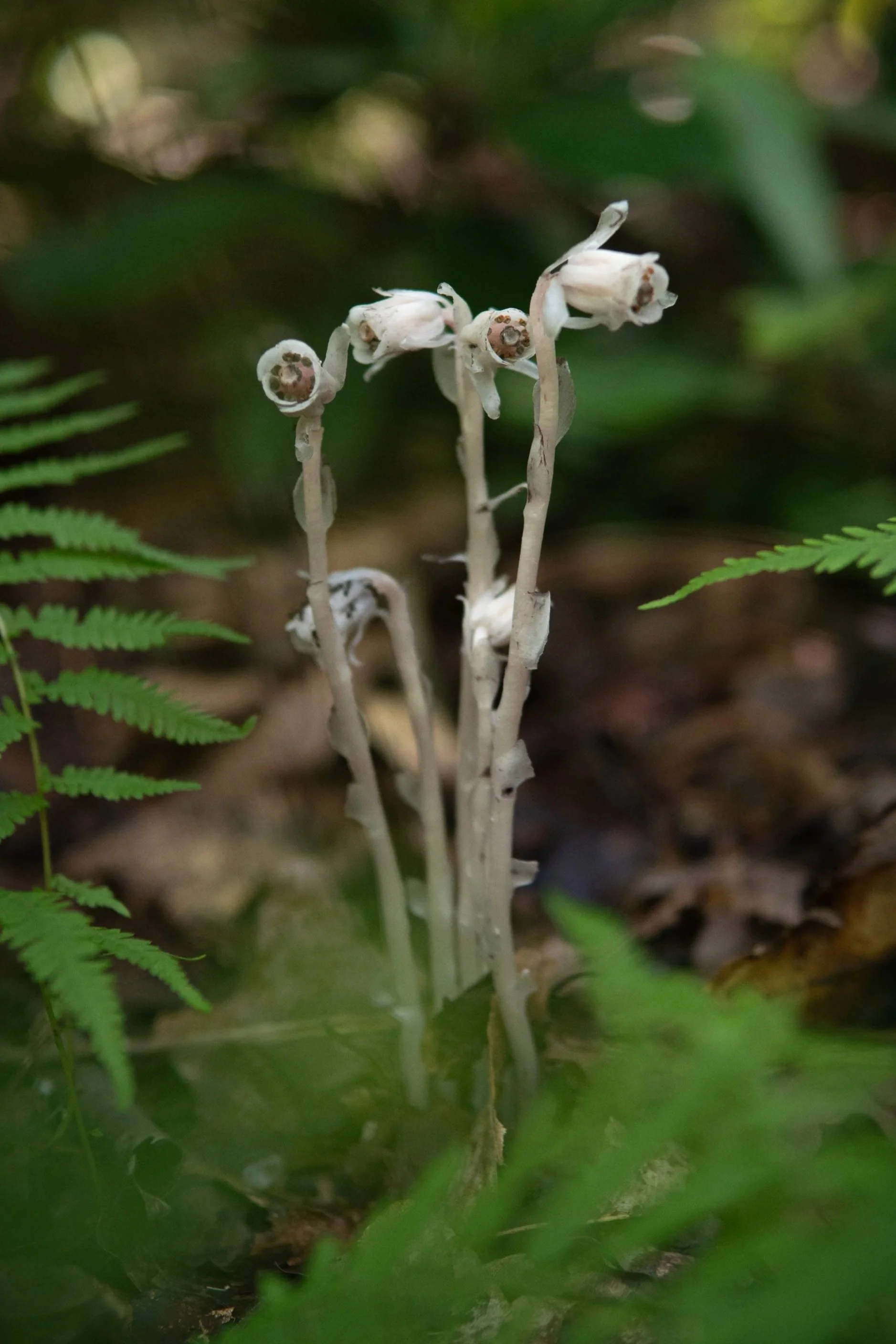
Ghost Pipe (Monotropa uniflora)
Native or Introduced: Native to North America
Parts Used: Aerial parts
Herbal Actions: Anodyne, sedative, anti-spasmodic, diaphoretic. *Dose and harvest with caution, a low-dose herb with protected status in some regions. Only harvest 1 out of every 10-20 clusters and dose by the drop. Do not use during pregnancy. Medicinal Preparations: Fresh plant only for tincture or flower essence
Botanical ID: Appearing in translucent white to pink upright flower clusters 4-6 inches in height. Each flower bends downwards as it matures and begins to turn black.
Habitat: Rich shaded woodlands, alongside oak, beech trees, and russula mushrooms
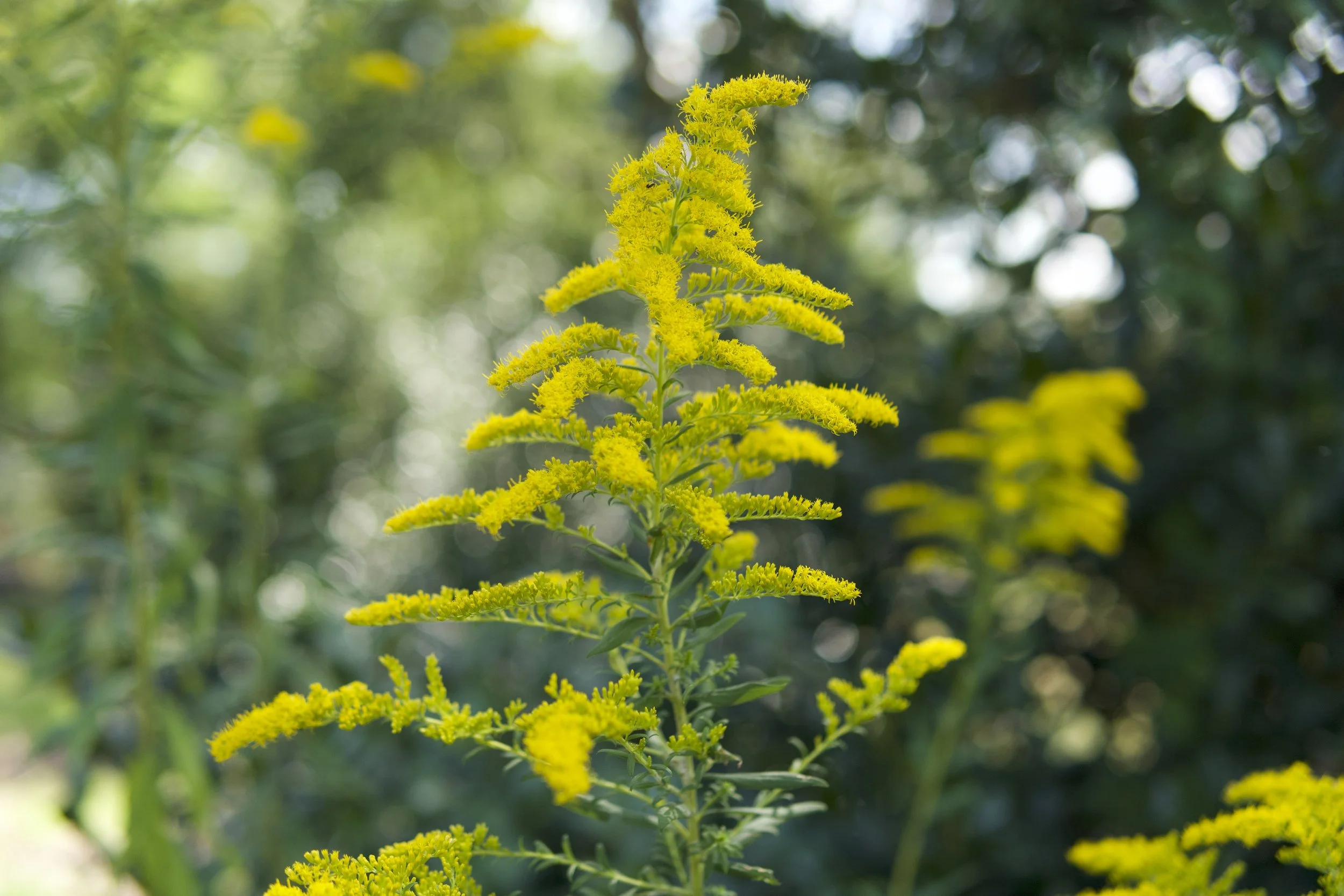
Goldenrod (Solidago spp.)
Native or Introduced: Native to North America
Part Used: Flowers and leaves
Herbal Actions: Anti-inflammatory, diuretic, carminative, expectorant, antipyretic, and astringent. Traditionally used to support urinary tract health, flush out kidney and bladder stones, soothe seasonal allergies, and ease muscle aches. Medicinal Preparations: Teas, tincture, oxymels, infused oil for topical use
Botanical ID: Tall, slender stems topped with plume-like clusters of small, golden-yellow flowers that bloom from late summer into fall. Leaves are alternate, lance-shaped, and finely toothed, with a slightly hairy underside. Stems are unbranched until the flowering panicle forms at the top.
Foraging Environment: Found in sunny meadows, open fields, forest edges, and roadsides.
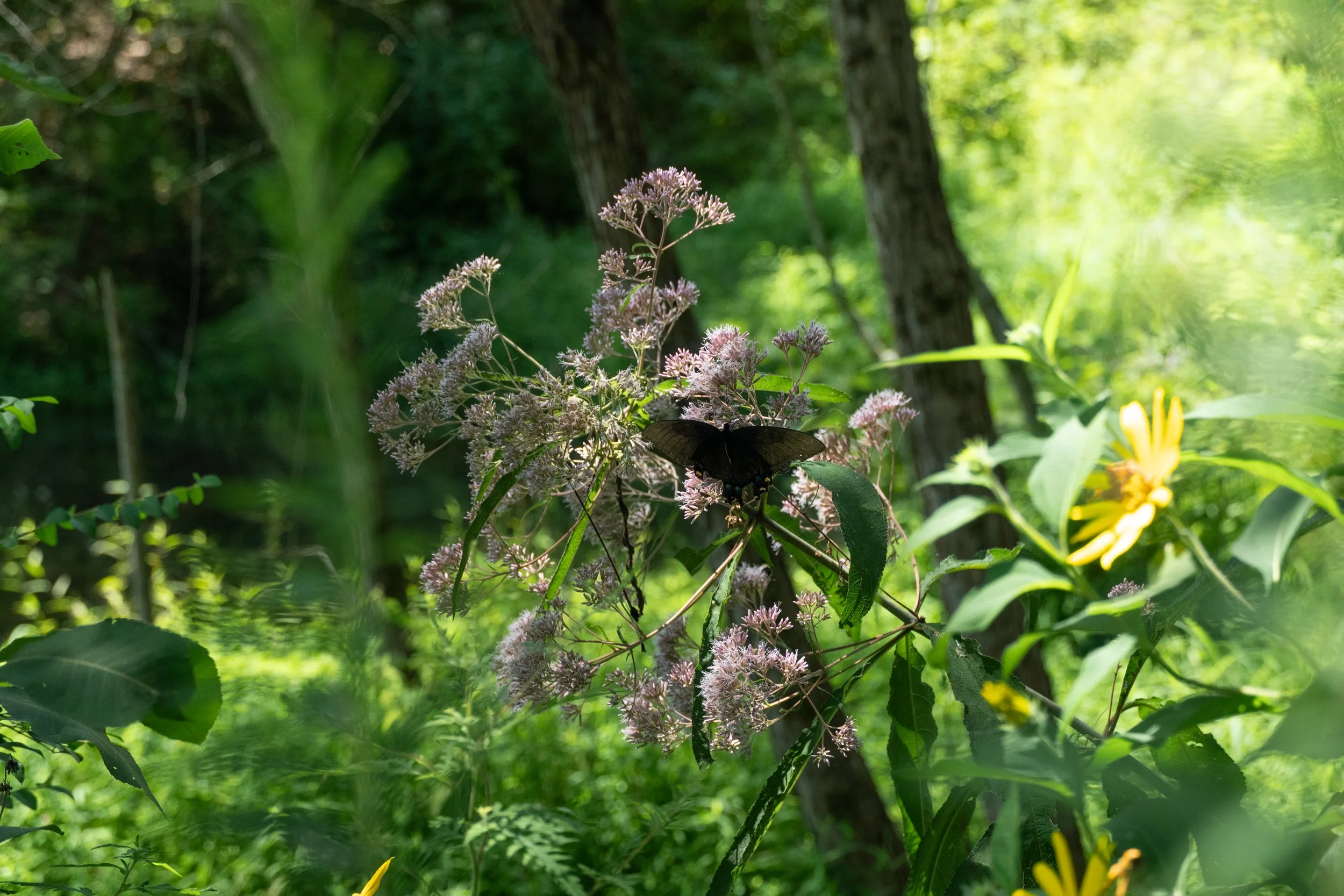
Joe Pye Weed (Eutrochium spp.)
Native or Introduced: Native to Eastern US
Part Used: Roots
Herbal Actions: Diuretic, diaphoretic, febrifuge, tonic, and alterative
Also known as “gravel root,” which reflects its use in supporting the body’s ability to dissolve urinary gravel and stones. Medicinal Preparations: Teas, tinctures, decoctions of the root
Botanical ID: Tall perennial reaching 4–7 feet, with whorled leaves in groups of 3–5 along sturdy, often purple-tinged stems. The flower heads form large, rounded clusters of tiny, mauve-pink to purplish florets, blooming in late summer. The blossoms have a sweet, vanilla-like scent.
Foraging Environment: Prefers moist soils and is found along streambanks, in wet meadows, lowlands, and woodland edges.
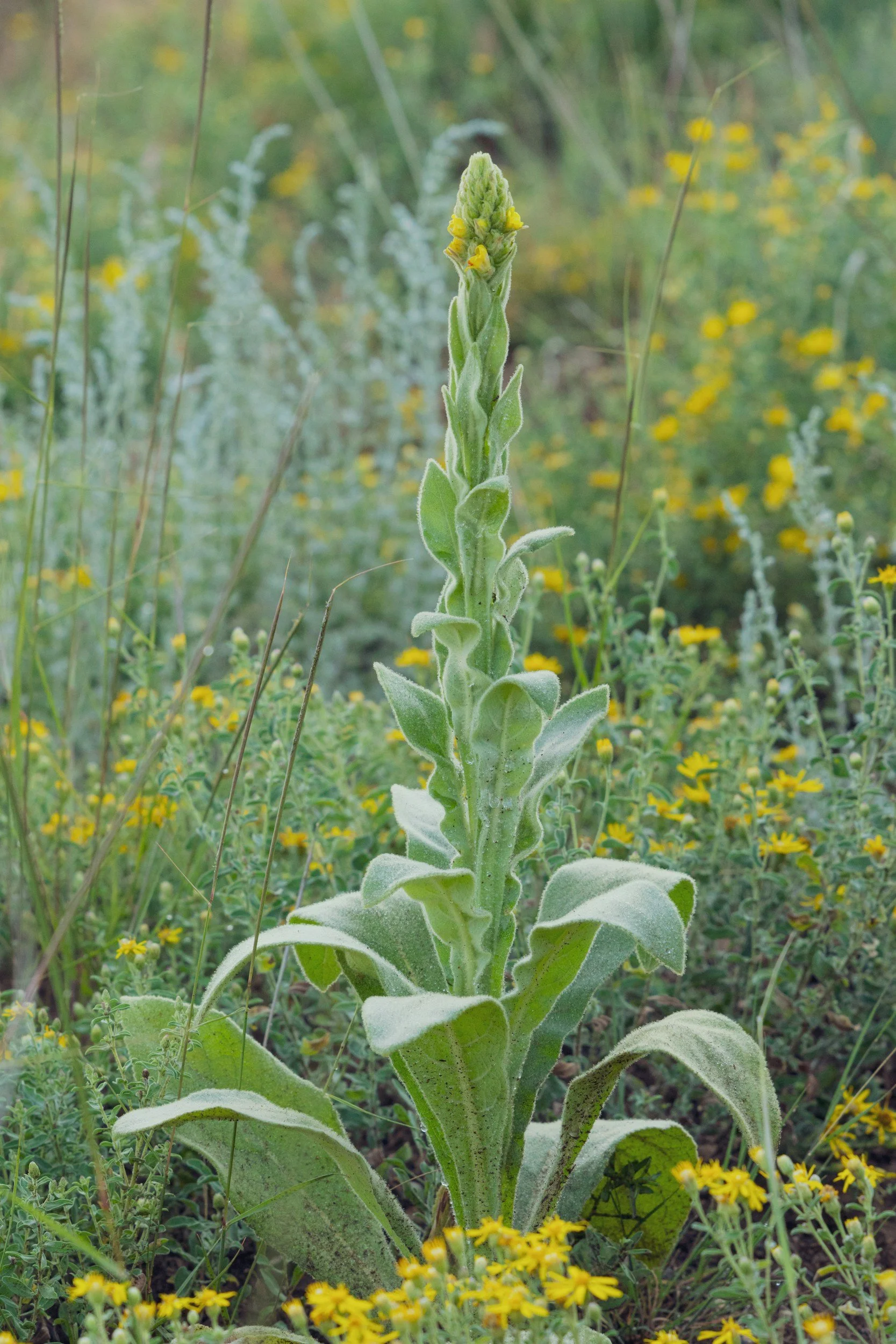
Mullein (Verbascum thapsus)
Native or Introduced: Introduced (Europe)
Parts Used: Leaves, flowers, root
Herbal Actions: Demulcent, expectorant, anti-inflammatory, diuretic Medicinal Preparations: Leaves used in teas, tinctures, and herbal smoke blends; flowers infused into oil for earaches, root made into tincture, tea, or syrup for bladder and UTI support.
Botanical ID: Tall biennial growing up to 6 feet with yellow flowers; soft, woolly, gray-green basal leaves.
Habitat: Dry, disturbed soils, sunny banks, fields.
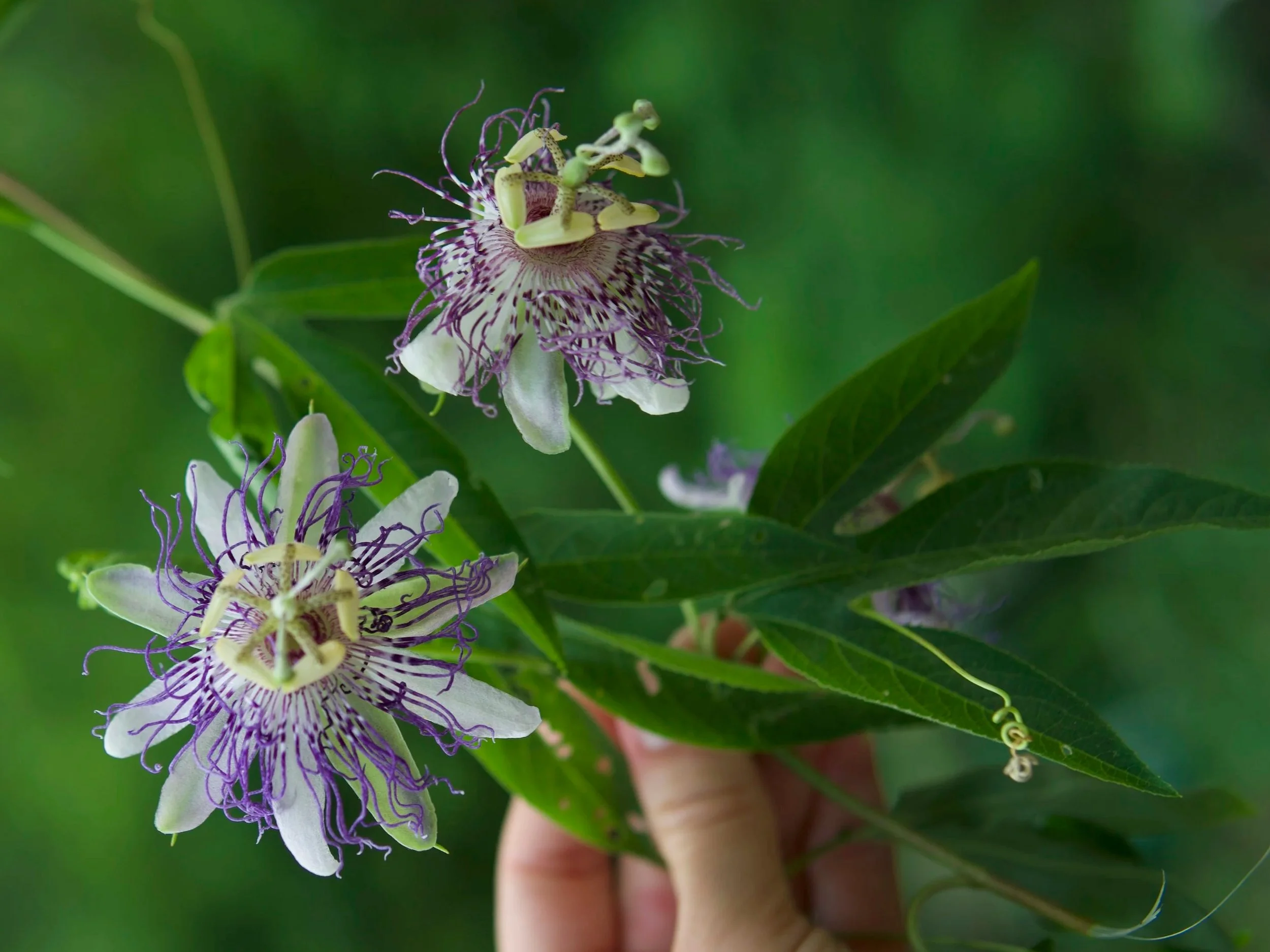
Passionflower (Passiflora incarnata)
Native or Introduced: Native to Eastern US
Parts Used: Leaves, stems, flowers
Herbal Actions: Nervine, anxiolytic, antispasmodic Medicinal Preparations: Teas, tincture, infused honey
Botanical ID: Climbing vine with tendrils; deeply lobed leaves; unique purple and white fringed flowers; oval green fruits turning yellow when ripe.
Habitat: Fencerows, woodland margins, open meadows.
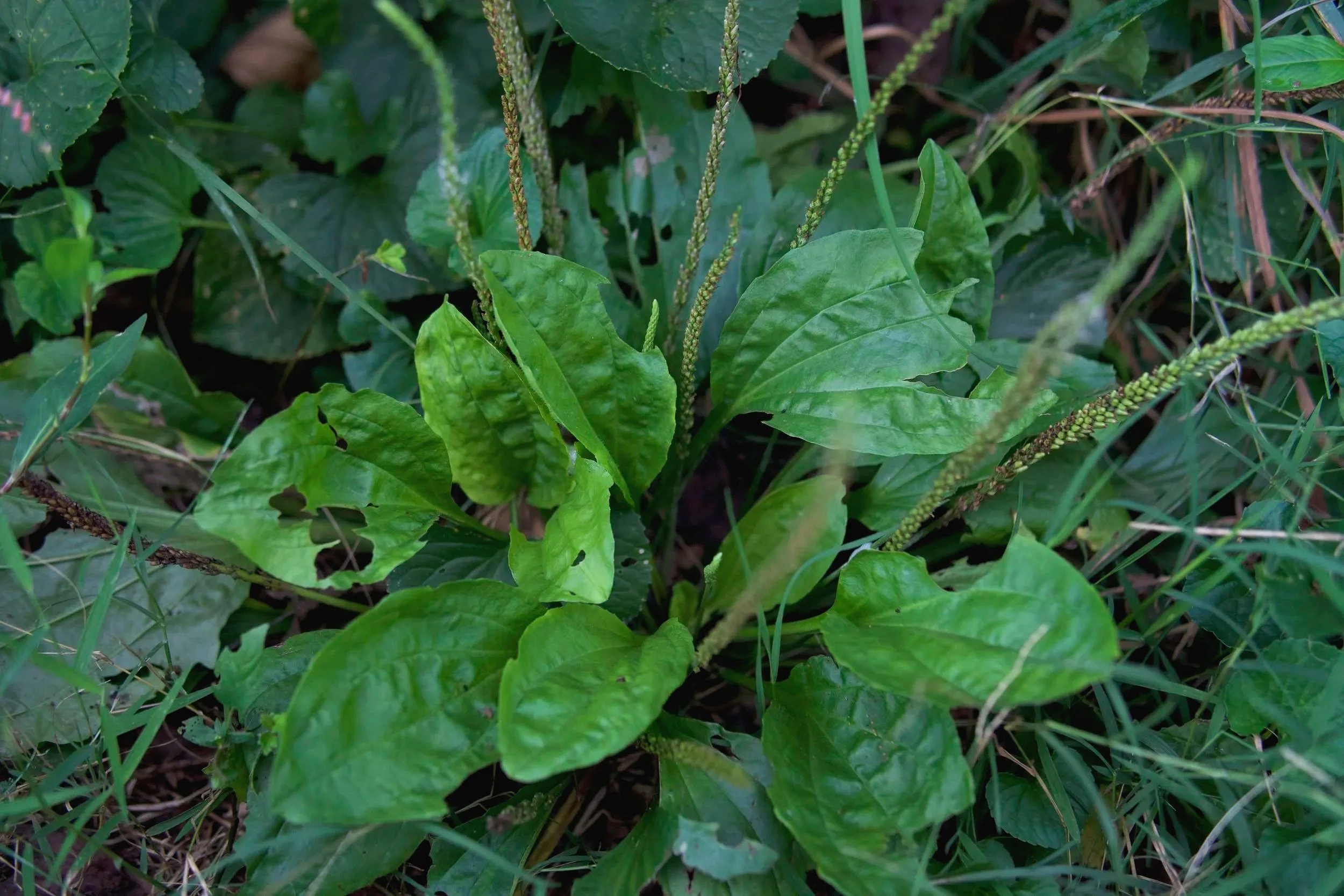
Plantain (Plantago major, P. lanceolata)
Native or Introduced: Introduced (Europe)
Parts Used: Leaves, seeds
Herbal Actions: Vulnerary, demulcent, drawing agent, wound healing Medicinal Preparations: Teas, tincture, salads, pestos, infused into oil for topical use
Botanical ID: Basal rosette of smooth-edged leaves with elastic-like parallel veins; slender, leafless flowering stalks with small green-brown flowers.
Habitat: Lawns, pathways, compacted soils.
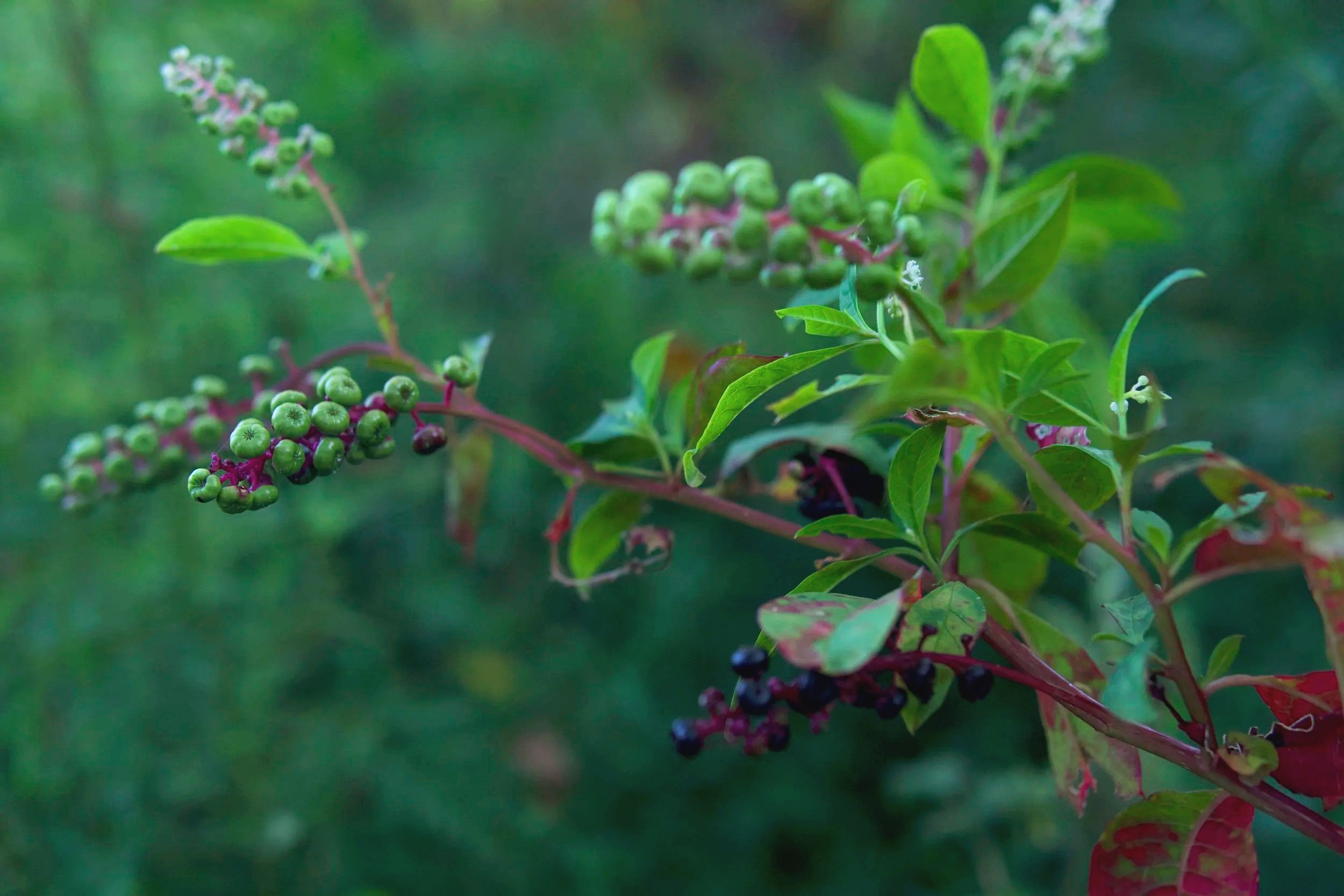
Pokeweed (Phytolacca americana)
Native or Introduced: Native to Eastern US
Parts Used: Root, berries, leaves *use only in specific traditional preparations; toxic if raw
Herbal Actions: Lymphatic stimulant and decongestant, anti-inflammatory *dose with caution, low dose herb, do not take during pregnancy Medicinal Preparations: Roots are used in tincture and infused topical oils; berries are traditionally used for arthritic pain if frozen and eaten only one a day taken whole like a pill; leaves can be eaten after boiling down three times, changing the water in increments of 20 minutes each, and must be harvested only before the plant branches out and flowers.
Botanical ID: Tall perennial with magenta stems, large alternate leaves, and racemes of white flowers followed by dark purple berries.
Habitat: Disturbed soils, pastures, damp woodland edges.
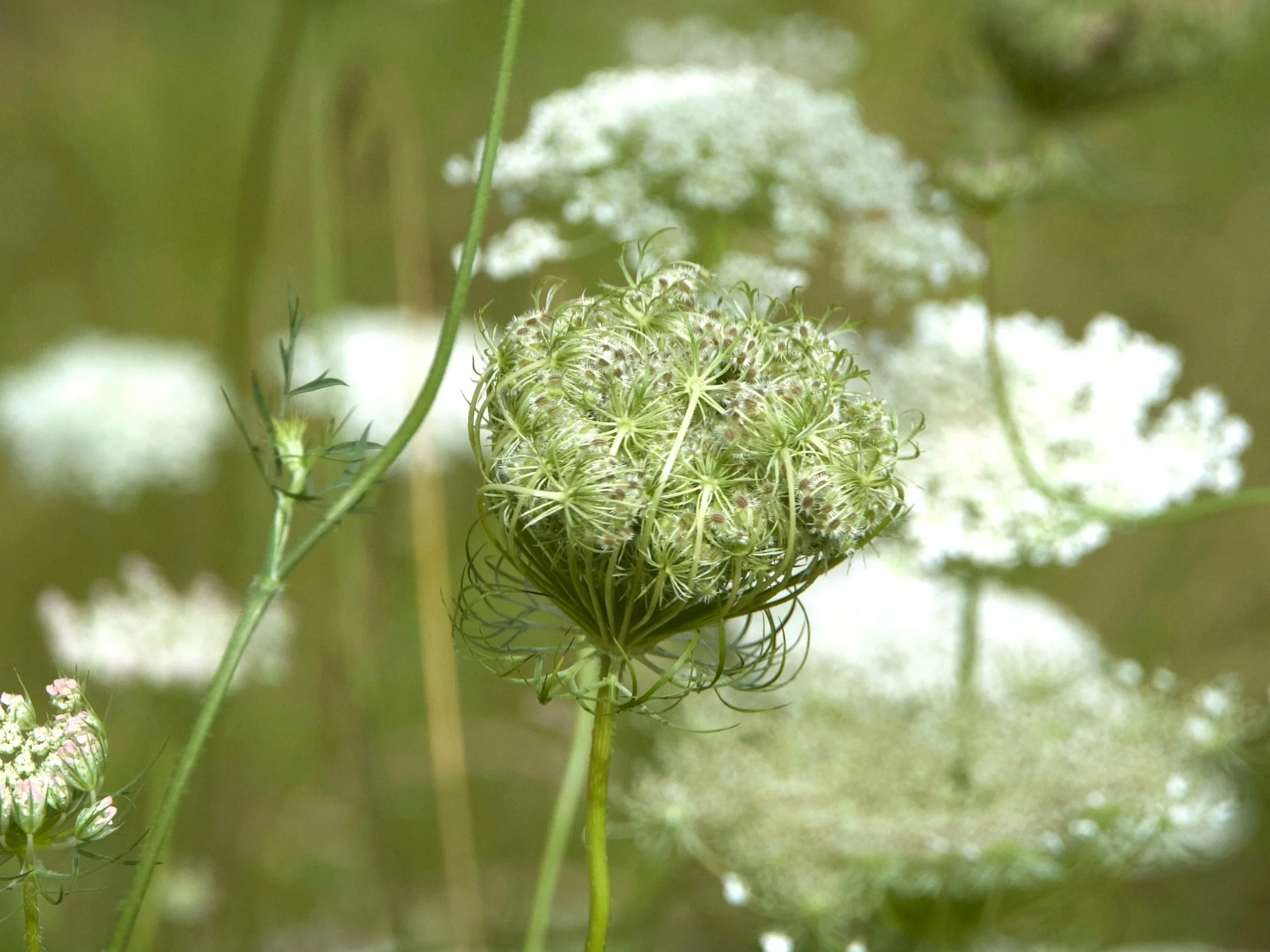
Queen Anne’s Lace (Daucus carota)
Native or Introduced: Introduced (Europe)
Parts Used: Seeds, young root, leaves *ID with caution, lookalikes include poison hemlock
Herbal Actions: Carminative, diuretic, digestive support, cardiac tonic, emmenagogue *Not to be used during pregnancy. Medicinal Preparations: Seeds are used in teas and tinctures; leaves can be eaten raw in salads or used in teas, and roots are harvested when young to be used like carrots.
Botanical ID: Lacy compound umbels of white flowers with a central purple floret; hairy stems; feathery leaves with carrot-like scent; seeds form birds-nest-like clusters when ready for harvest.
Habitat: Fields, roadsides, sunny open areas.
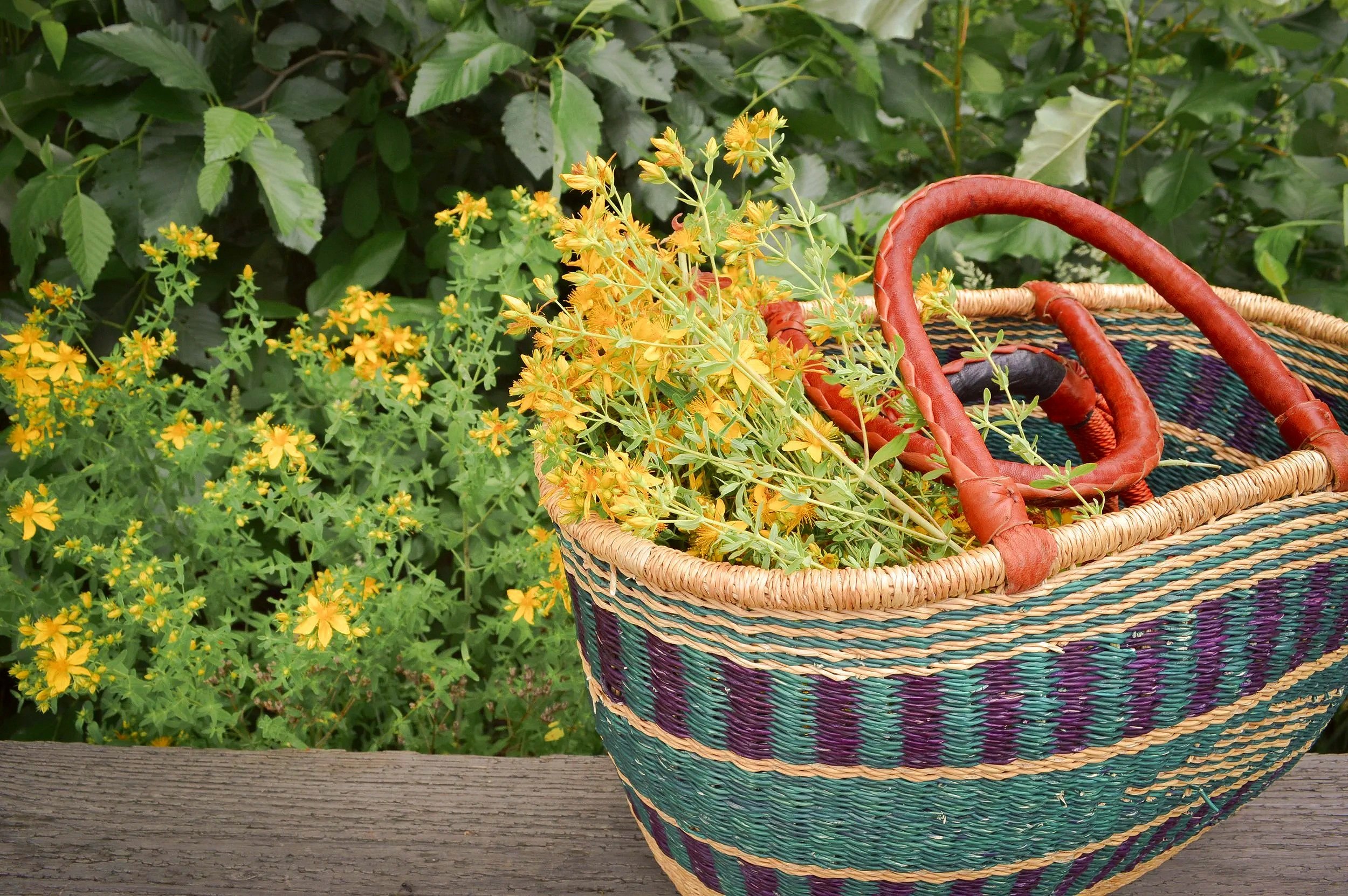
St. John’s Wort (Hypericum perforatum)
Native or Introduced: Introduced (Europe)
Parts Used: Flowering tops
Herbal Actions: Antidepressant, nervine, antiviral, wound healing, anxiolytic Medicinal Preparations: Fresh plant only for tincture and infused oil
Botanical ID: Bright yellow flowers with five petals; tiny perforations in leaves visible when held to light; woody lower stems.
Habitat: Fields, roadsides, open woodlands.
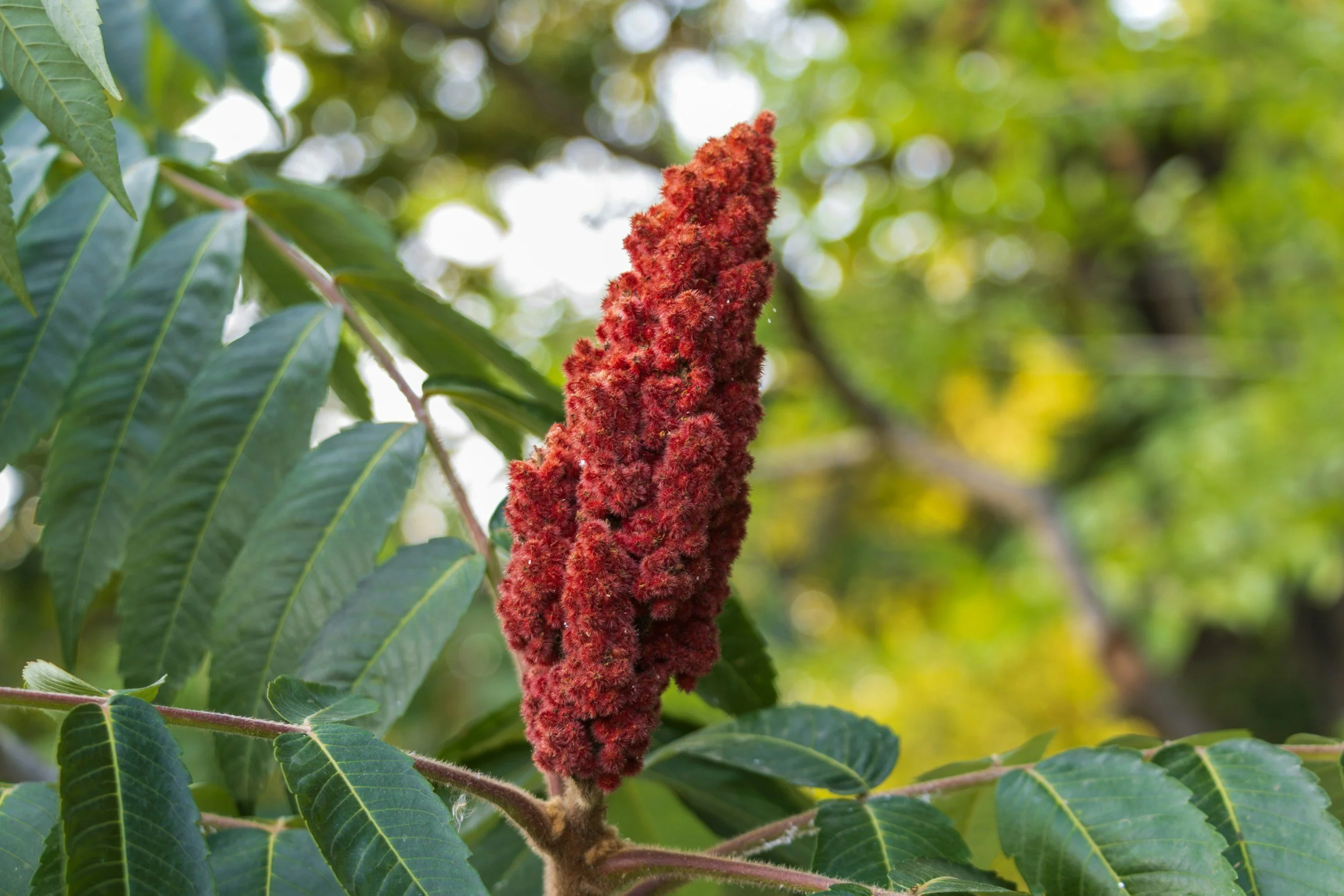
Sumac (Rhus glabra, Rhus typhina)
Native or Introduced: Native to Eastern US
Parts Used: Root bark, berry clusters
Herbal Actions: Astringent, vitamin C-rich, cooling, antipyretic Medicinal Preparations: Spice blends, teas, lemonade
Botanical ID: Shrub or small tree with pinnate leaves; dense red conical berry clusters; smooth or velvety stems depending on species.
Habitat: Sunny slopes, field edges, roadsides.
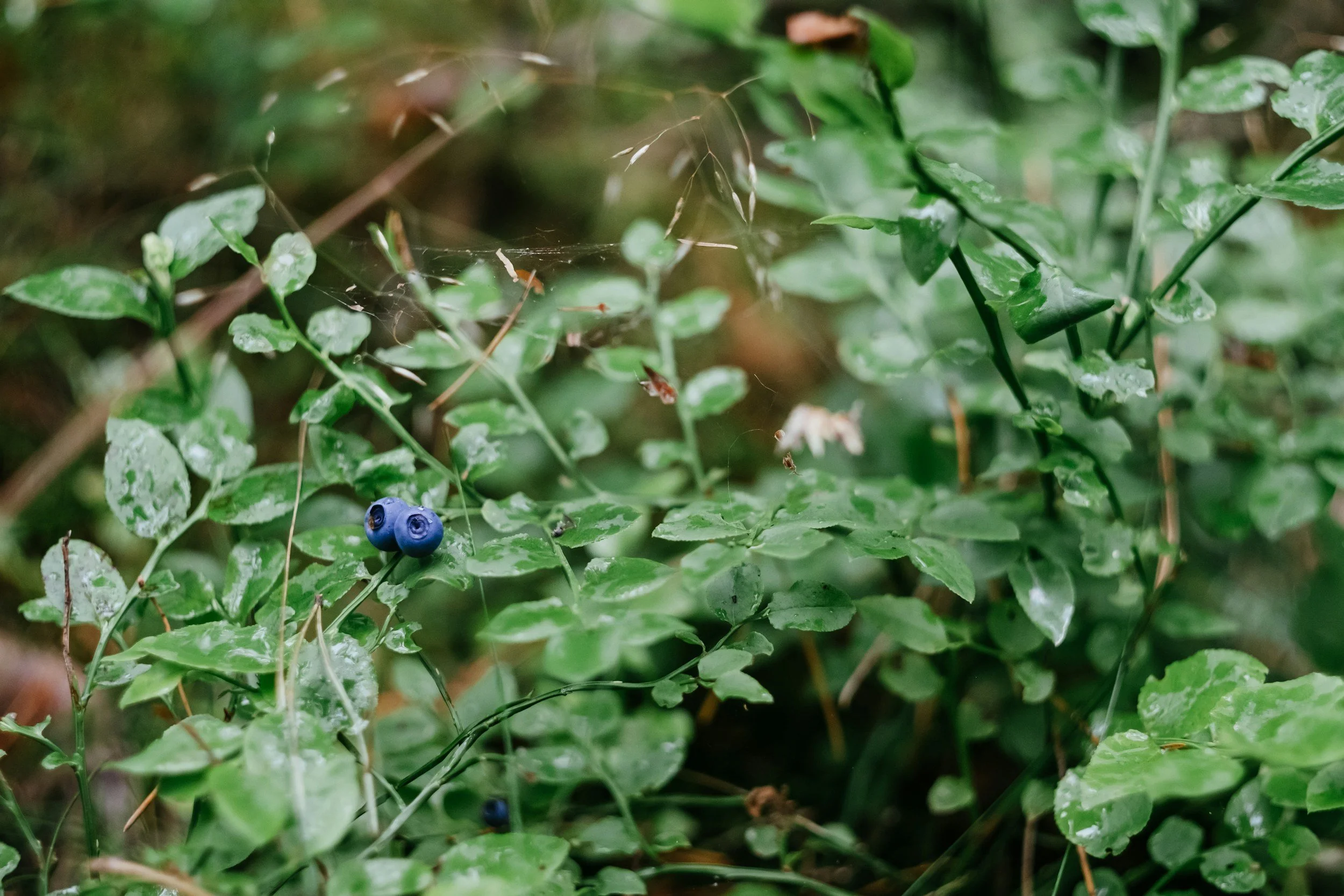
Wild Blueberries (Vaccinium spp.)
Native or Introduced: Native to North America
Parts Used: Berries, leaves
Herbal Actions: Antioxidant, nutritive, anti-inflammatory Medicinal Preparations: Jams, syrup, oxymels
Botanical ID: Low shrubs with oval leaves; small white or pink bell-shaped flowers in spring; clusters of blue-purple berries with whitish bloom.
Habitat: Acidic soils in woodland forests, and rocky slopes.
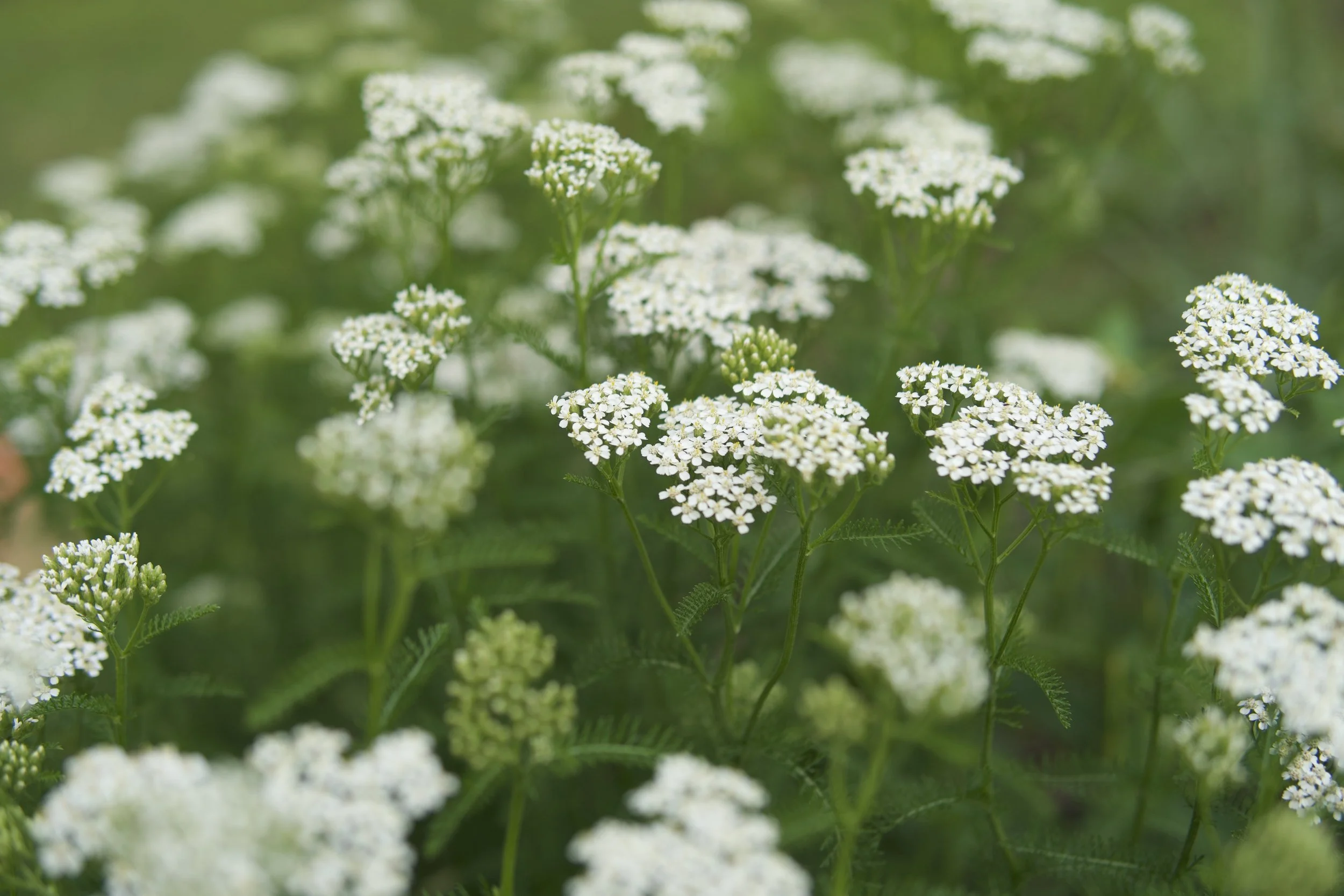
Yarrow (Achillea millefolium)
Native or Introduced: Native to the Eastern US and introduced mixed species
Parts Used: Aerial parts
Herbal Actions: Styptic, circulatory stimulant, anti-inflammatory, bitter tonic, astringent, antipyretic, mild diuretic, wound healing Medicinal Preparations: Tincture, infused oil for topical use
Botanical ID: Feathery, aromatic leaves; flat clusters of white (sometimes pink) flowers; upright stems.
Habitat: Meadows, open woods, roadsides.
Learn in Person
While reading about these plants can inspire your foraging journey, nothing compares to walking the land and learning by sight, scent, and touch. Every month, join us for an Herb Walk & Crafting Class in our apothecary garden at Ivy Rose Farm in Clermont, Georgia. In this class you’ll explore seasonal herbs, and learn to make your own handcrafted medicines.
References
Chevallier, A. (2016). Encyclopedia of herbal medicine (3rd ed.). DK Publishing.
Gladstar, R. (2008). Herbal recipes for vibrant health: 175 teas, tonics, oils, salves, tinctures, and other natural remedies for the entire family. Storey Publishing.
Hoffmann, D. (2003). Medical herbalism: The science, principles, and practices of herbal medicine. Healing Arts Press.
Howell, P. K. (2006). Medicinal plants of the southern Appalachians. BotanoLogos Books.