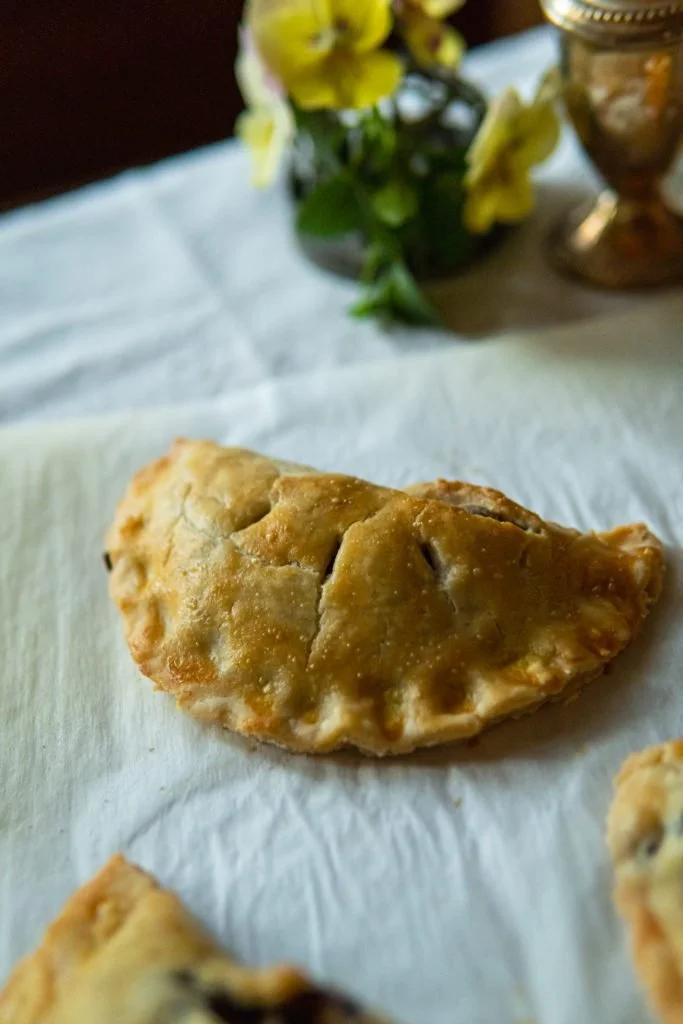
Wild Mushroom Hand Pies

If you're looking for a unique and delicious way to celebrate the holiday season, try these Wild Mushroom Hand Pies. Made with a variety of conventional and foraged mushrooms and wrapped in flaky, buttery pastry, these hand pies are the perfect combination of savory and sweet. They're great as a snack, appetizer, or even a main course, and are sure to be a hit with your family and friends. Whether you're hosting a Christmas party or just looking for a cozy meal to enjoy by the fire, these little pies are sure to hit the spot.
FOraging Tips
Mushroom foraging can be a fun and rewarding activity, but it is important to approach it with caution and proper knowledge to ensure your safety. Here are a few tips to help you successfully identify and forage for mushrooms:
Learn the key elements of mushroom identification: Familiarize yourself with the different parts of a mushroom, including the cap, stem, gills or pores, and spores. Pay attention to the size, shape, color, texture, and other identifying characteristics of the mushroom you are trying to identify.
Use multiple resources: Don't rely on just one source for identifying mushrooms. Use a combination of field guides, online resources, and experienced mushroom hunters to help you accurately identify the species you are looking for.
Be cautious with new or unfamiliar species: If you are unsure about a mushroom's identification, do not eat it. Some species of mushrooms can be deadly when ingested, and it is better to err on the side of caution.
Cook all edible wild mushrooms: Even if a mushroom is identified as edible, it is important to cook it before consuming. This helps to eliminate any potential toxins or parasites that may be present in the mushroom.
By following these tips, you can safely enjoy the fun and rewarding experience of mushroom foraging. Just remember to always exercise caution and use multiple resources to accurately identify any mushrooms you are considering foraging or consuming.
HOney MushroOms
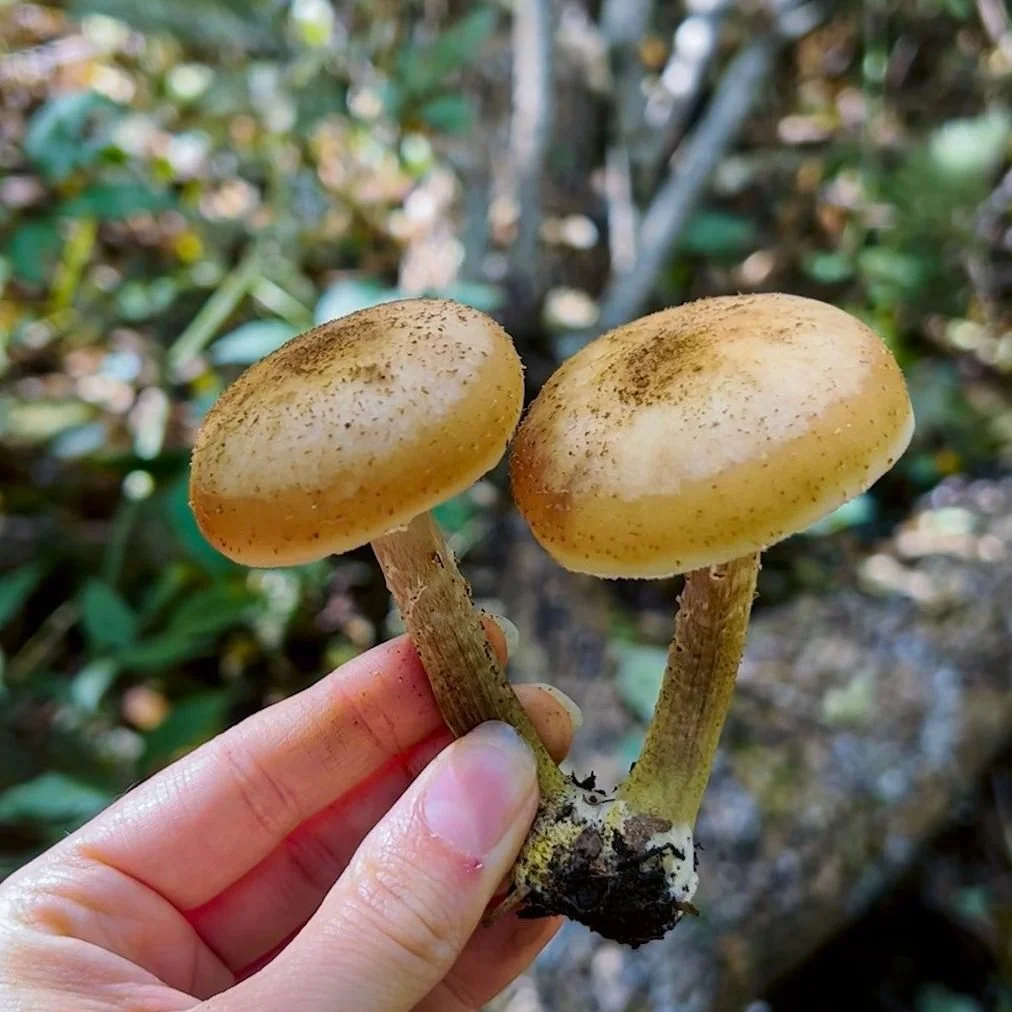
Honey mushrooms, also known as Armillaria mellea, are a type of edible wild fungi that can be found in forest settings, growing on or against broadleaf trees, including fruit trees in orchards, as well as on stumps, dead roots, and occasionally on fallen branches. It is important to note that all edible wild fungi must be properly identified by a qualified professional and cooked before consuming, as some fungi can be deadly when ingested.
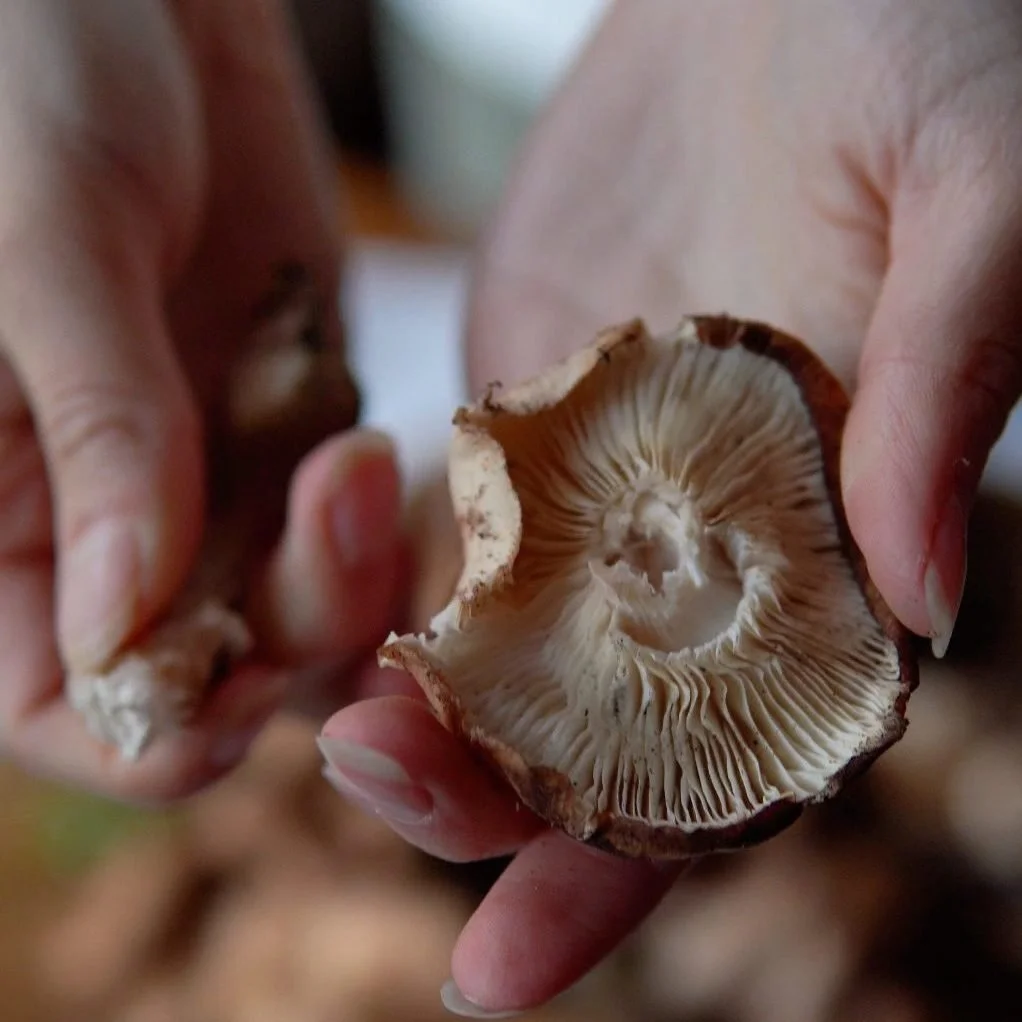
Distinguishing features of honey mushrooms include a cap that measures between 5 to 15cm in diameter and ranges in color from honey-yellow to red-brown, with a darker center and a white, firm flesh. The cap will also have distinctive little "freckles" on top that are usually textured. The cap is initially deeply convex but flattens and develops wavy, striate margins as it matures. The stem of the mushroom is white when young but turns yellow or yellowish-brown and becomes finely woolly as it ages, growing to a height of 7 to 20 cm and tapering at the base due to the clustered growth pattern. The stem is fairly tough and may be bald at maturity.
Honey mushrooms have creamy white spore prints and can be found from as early as late July through November, with the peak season being September and October. They have adnate or weakly decurrent gills that are crowded and flesh-colored, gradually becoming yellowish and developing rusty spots as they mature.
It is important to be cautious when foraging for honey mushrooms, as there are several species that can resemble them but are poisonous. However, two tips on differentiating all of these are the spore color and the coloring. Honey mushrooms will often have a white powder dusting around the colonies. These are the white spores being released by the mushrooms. Honey mushrooms also have distinctive dark brown freckles along the light brown honey colored cap. In contrast the poisonous jack-o'-lantern (Omphalotus illudens), has an orange cap with a smooth surface. The big laughing gym (Gymnopilus junonius), is also orange and has a bitter taste, as well as orange-brown spores and a ring. Another lookalike to watch out for is the deadly galerina (Galerina marginata), which is smaller in size, has a smooth cap, a stalk ring, and brown spores. Be sure to properly identify any mushrooms using the spore color, cap color, stalk and gill type before consuming them to avoid any potential dangers.
When it comes to edibility, it is best to consume young caps of the honey mushroom, as the stems can be fibrous and difficult to eat. The caps should also be fully cooked, as eating them while they are watery and brown may cause stomach upset in some people. It is recommended to gather and eat honey mushrooms while the veil is still attached (whole or in part) to the stem, as this is when they are at their best.
It is important to remember that proper identification and cooking of wild fungi is crucial to avoid any potential dangers. Do not eat any fungi that has not been properly identified using several reliable sources.
Why Cook YOur MushroOms?
There are several reasons why it is important to cook mushrooms before consuming them. First and foremost, cooking can help to eliminate any potential toxins or parasites that may be present in the mushrooms. Cooking mushrooms can help to improve their taste and texture, making them more enjoyable to eat. Additionally, the heat from cooking is needed to help break down the chitin in the mushroom cell walls.Chitin is a tough, semi-transparent carbohydrate that gives structure and support to the cell walls of fungi, including mushrooms. It is difficult for the human digestive system to break down chitin, which means that it can pass through the digestive tract largely undigested. This can lead to digestive discomfort and reduced absorption of nutrients from the mushrooms. Cooking mushrooms can help to break down the chitin in their cell walls, making them easier to digest and more nutritionally available to the body. In addition to improving digestion, cooking mushrooms can also help to improve their taste and texture, making them more enjoyable to eat.
"Pie is like love: it should be shared." - Unknown
Wild MushroOm Hand Pies (Gluten Free, Vegan)
Makes around 6 - 8 pies
For the Filling
6 cups fresh mushrooms of choice, sliced and stems removed if using shiitake or honey mushrooms (I used crimini and honey mushrooms)
1 white onion, chopped
3 cloves garlic, chopped
1 tbs fresh rosemary, chopped (1 tsp if using dried)
1 tbs fresh thyme, chopped (1 tsp if using dried)
4 tbs butter (I used Earth Balance diary free)
1/2 tsp sea salt
Instructions:
To begin, prepare your pastry dough (recipe below) and set aside in the refrigerator to chill at least one hour or overnight.
Next, chop all ingredients and set aside. Heat a small skillet over medium heat and add 2 tbs of butter. Once the butter is melted, add your onion, garlic and salt. Sauté until the onion begins to caramelize and turn translucent.
Now, add in your chopped mushrooms, fresh herbs and remaining butter then continue sautéing until the mushrooms break down and soften (about 10 minutes).
Set aside your filling while you prepare the dough.
Preheat your oven to 350F.
To assemble the pies, using a floured rolling pin begin by rolling out a small portion of dough at a time to about 1/4 of an inch in thickness. Don't worry about it being a perfect circle.
Flour the surface of your dough. Using a bowl about 5 inches in diameter, place it over your dough and cut out a perfect circle. Continue this to create about 6 circles.
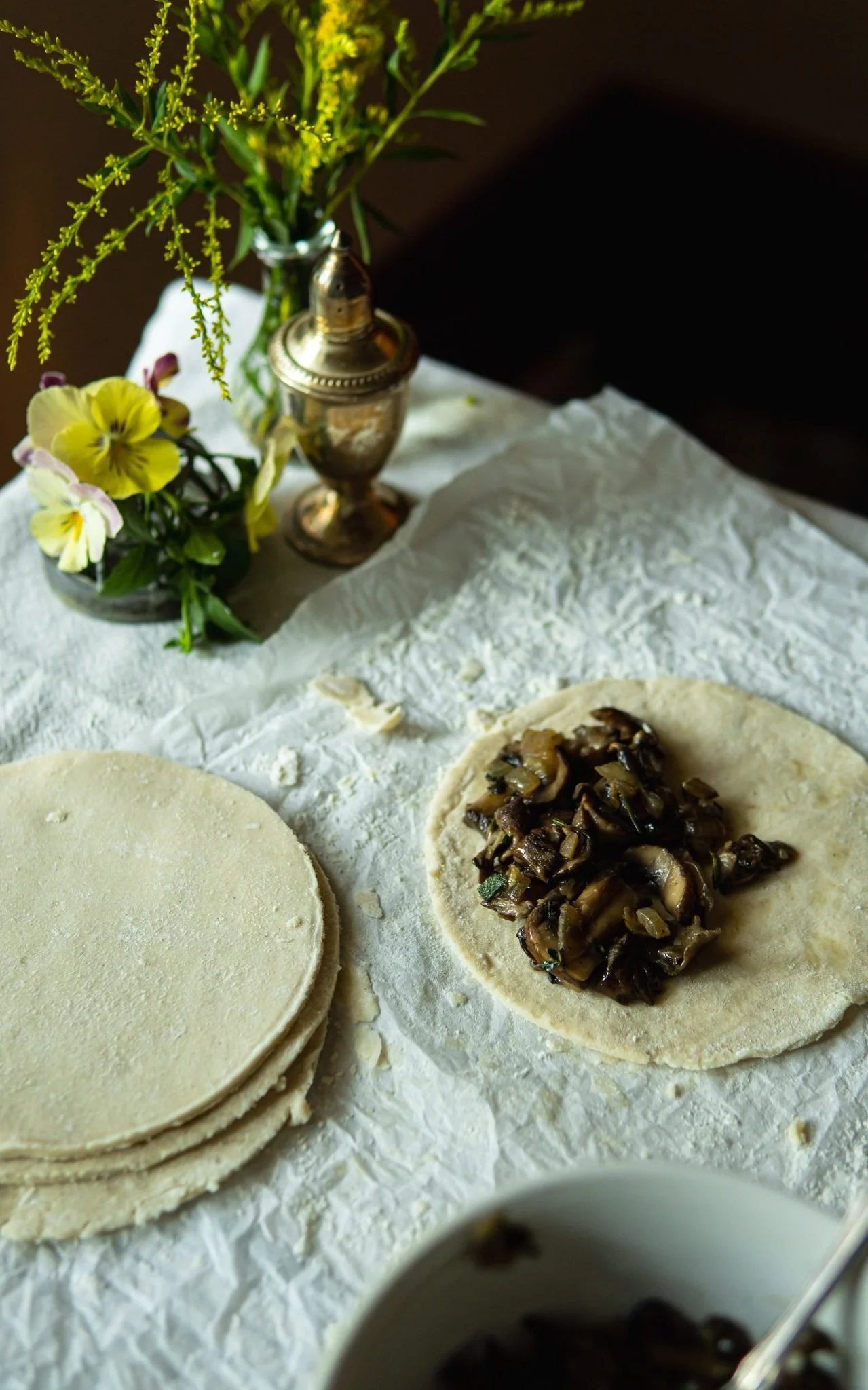
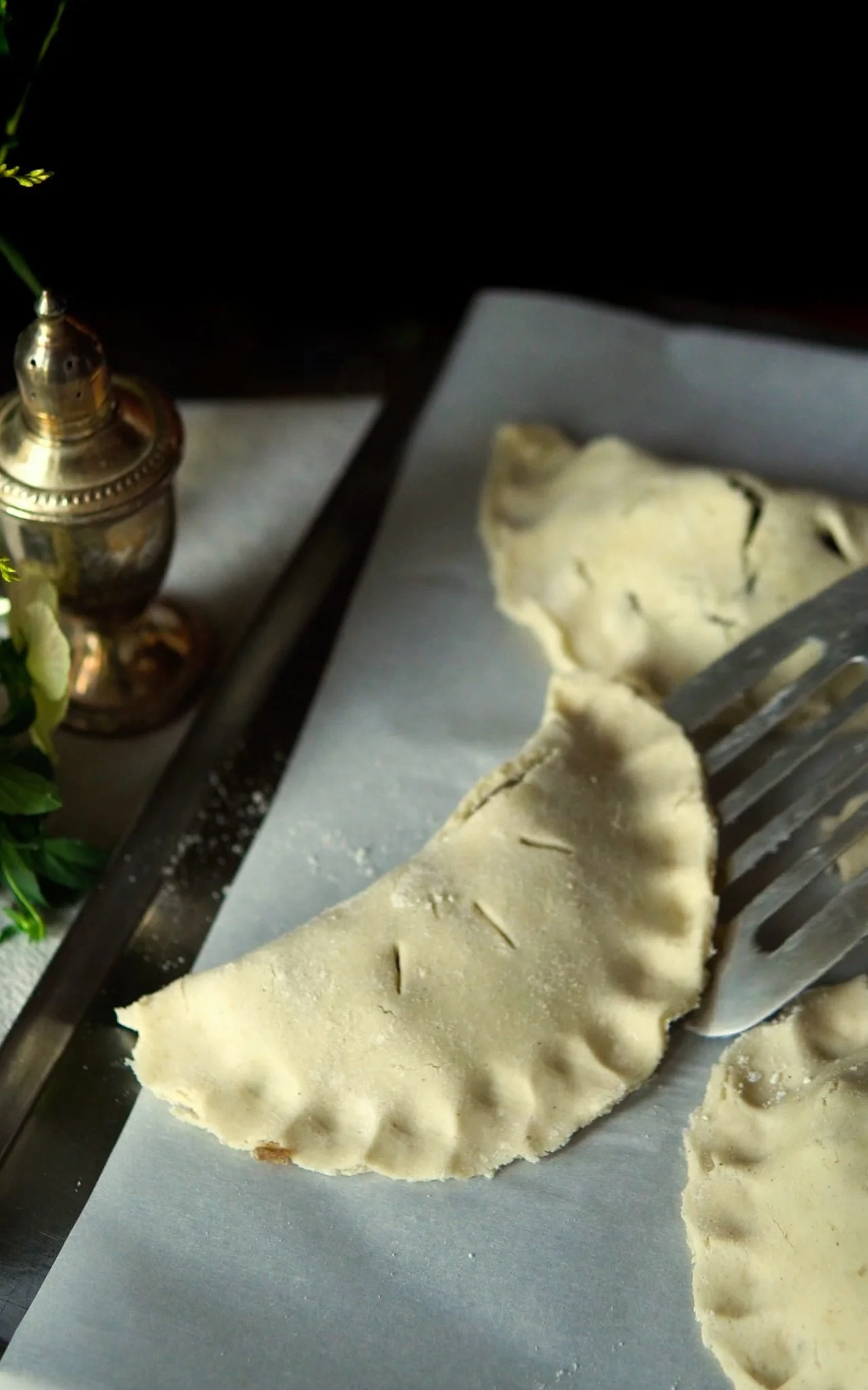
To finish assembling the pies, take about 4 tbs of filling and spoon it over one half of each of your circles. Then, gently fold over the other half of the dough on each pie to create a half moon shape before sealing the sides using your knuckles. Continue until all the filling is gone.
Next, whisk together one egg and brush it over the little pies in order to help them brown evenly, then poke three holes in the top of each.
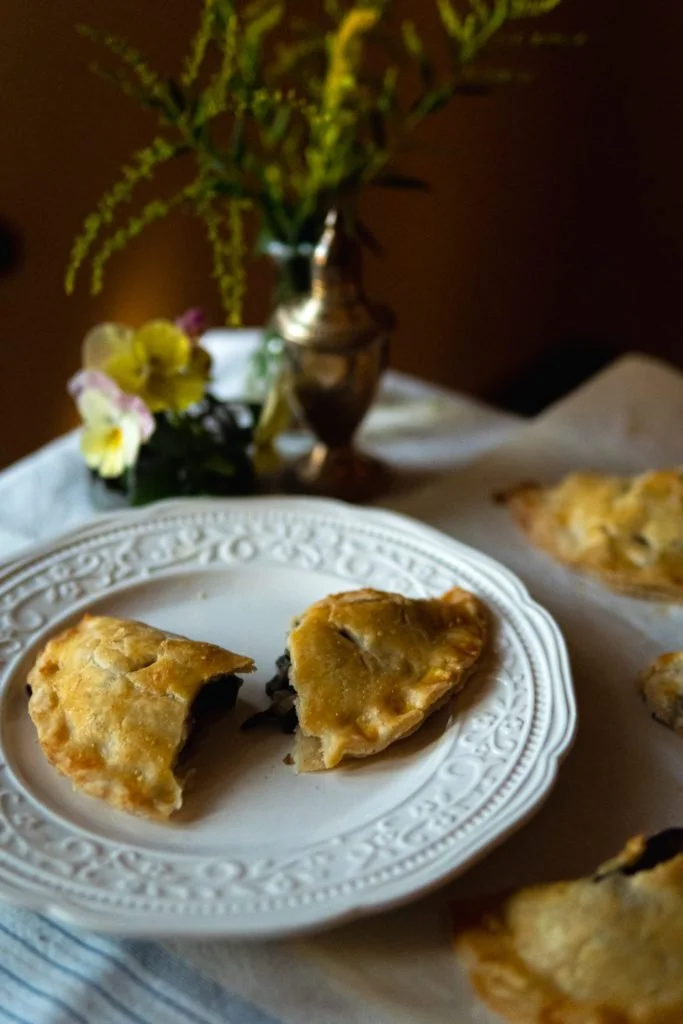
Bake the pies on a parchment lined baking sheet for 25 - 30 minutes or until golden brown on top, then enjoy!
FOr the Pastry
6 ounces (1 1/4 cups + 2 tbs) Gluten free all-purpose flour blend (I always use King Arthur)
4 ounces Butter, chilled (I used Earth Balance diary free)
2-3 ounces (1/4 - 1/3 cups) Ice cold water
1/2 tsp Salt
1 Tbsp Sugar
Instructions:
To begin, mix together the dry ingredients in a large bowl. Cut the fat into small pieces and add them to the flour mixture. Use a pastry cutter or your fingers to incorporate the fats into the flour mixture until it has an uneven crumbly texture, with some pieces being as big as an almond and others being as small as peas. Add water and mix until the dough comes together and sticks, even if it is a little shaggy.
Next, transfer the mixture to a flat surface and use the heel of your hand to knead the dough outwards, creating flat layers of flour and butter. Gather the dough back together and continue kneading until it comes together to form a smooth ball.
Divide the dough in half and form each half into a flat disc. Wrap each disc in plastic wrap and refrigerate for at least an hour, or overnight. This recipe may not use all the dough so leftovers can be wrapped and kept in the freezer.